
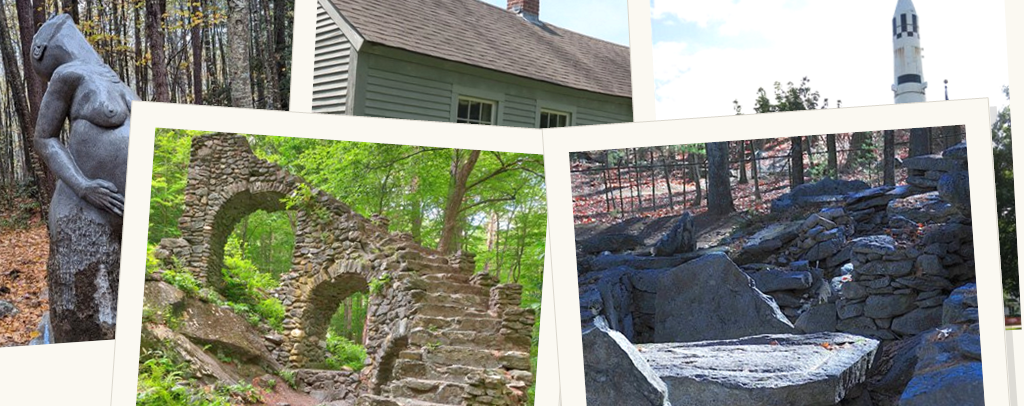
New Hampshire’s unusual stops reward the traveler willing to leave the main road. A former ski hill has become a forest gallery, a short-lived colonial village survives in cellar holes, and a rocket stands beside a rail trail. Add a staircase with no house and a woodland stone puzzle, and you’ve got five places that make the state feel wonderfully unpredictable.
1. Andres Institute of Art: Brookline
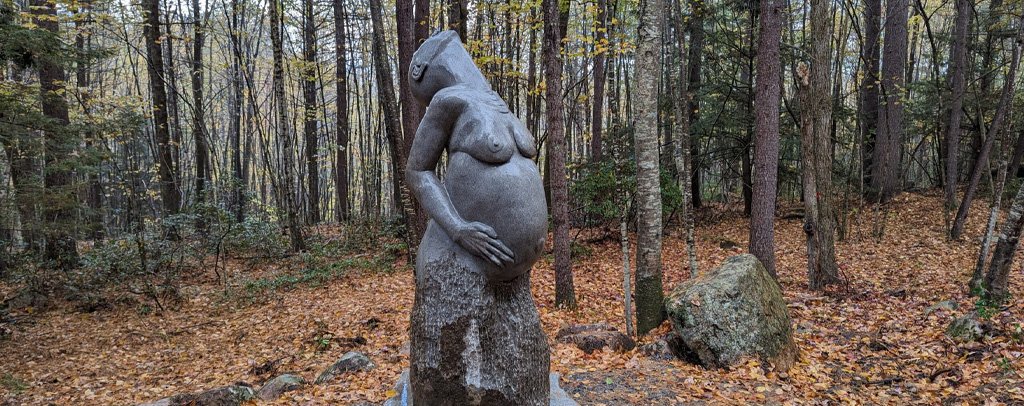
A former ski hill has found another way to give visitors something to look up at. More than a hundred sculptures stand along the Andres Institute of Art’s wooded trails, with stone and steel forms appearing around bends and between trees.
Artists from around the world have contributed to the collection, turning a walk into a search for whatever comes next. The grounds are free to visit from dawn to dusk, with donations welcome. Pick up a trail map and choose a route that suits your footing; parts of the hill are steep and uneven. Comfortable shoes are a better companion here than gallery manners.
2. Monson Center: Hollis
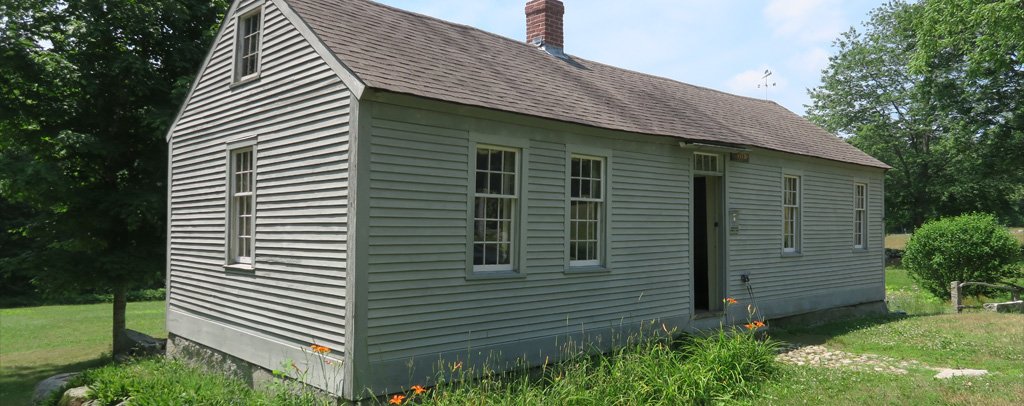
Monson lasted just thirty-three years, from 1737 to 1770. Now its old roads lead past cellar holes and stone walls rather than neighbors’ front doors. Walking through this vanished settlement is a pleasantly strange way to spend an afternoon, especially when you start trying to picture a village in the gaps between the trees.
A three-mile trail network passes seven former home sites, a restored Gould House, fields, and a beaver wetland. Markers introduce some of the people who lived here. Admission is free. Use the Adams Road access off Federal Hill Road and leave the archaeological remains undisturbed. The unanswered questions are interesting enough without adding ghost stories.
3. Madame Sherri Forest: Chesterfield
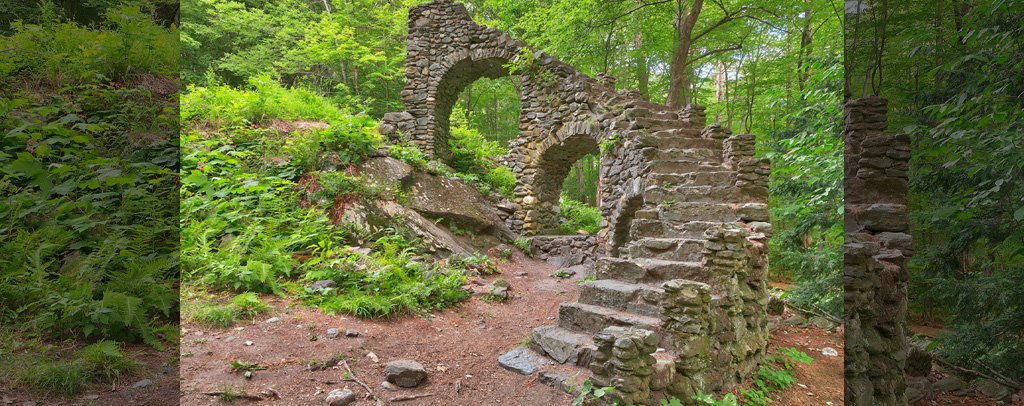
A grand staircase climbs through the trees at Madame Sherri Forest, though the house it once led to is gone. Costume designer Antoinette Bramare, known as Madame Sherri, built her French-inspired summer retreat here in 1930 and entertained guests with considerable flair.
Fire and neglect left a foundation, chimney, and the battered stairway as reminders. The ruins are a short walk from the Gulf Road trailhead, with a longer loop toward Indian Pond. Look from the trail and respect the roped-off areas: part of the upper staircase collapsed in 2021. The setting feels theatrical enough without putting weight on the remaining stone.
4. Warren Redstone Missile: Warren
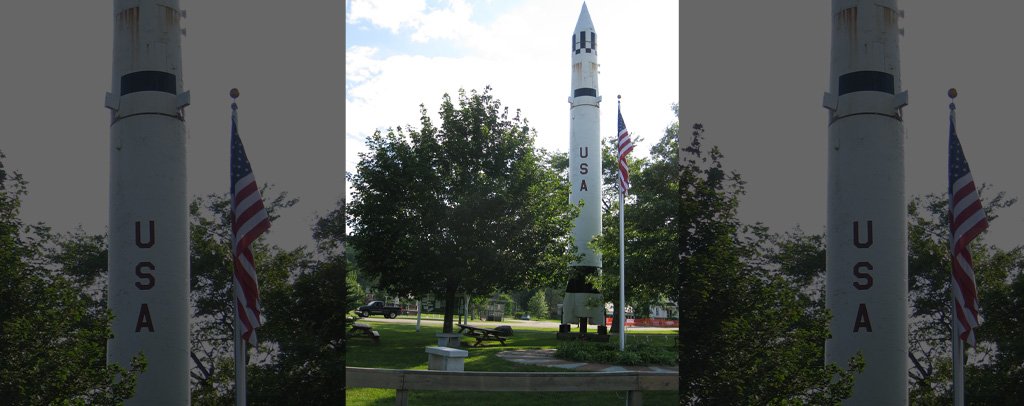
Warren’s town green has the sort of landmark you expect beside a launchpad, not a White Mountains trail. A real decommissioned Redstone missile stands by the start of the Warren Recreational Rail Trail, where it arrived in the early 1970s.
The Redstone program began as military technology, while modified versions helped launch America’s first astronauts. This missile did not carry Alan Shepard, tempting as that story may be. You can see the rocket from the public trailhead area and, if a quick photo stop isn’t enough, follow the old rail corridor for a walk.
5. America’s Stonehenge: Salem
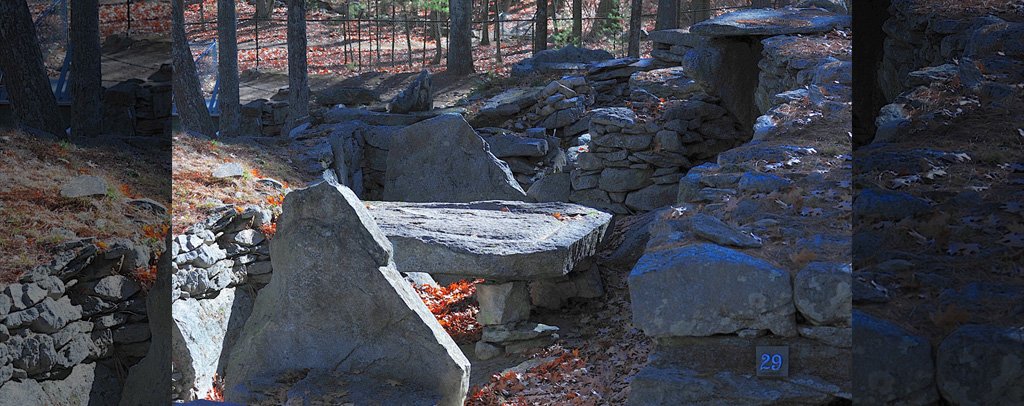
Stone chambers and passages in a Salem woodland have inspired decades of arguments. Who built them? How much has changed since? The site called America’s Stonehenge was once known as Mystery Hill, although its name does not establish any historical connection to the monument in England.
A marked route passes walls, low chambers, a large slab often called the Sacrificial Table, and alignments that fuel speculation. The attraction presents its interpretation, while the stonework gives visitors room to consider other explanations. This is a paid outdoor visit, so wear shoes suited to uneven ground and enjoy a mystery that still invites debate.
Follow each attraction’s directory link for location and visitor details. Check hours and trail conditions before setting off, and respect barriers or protected remains along the way. The best detours leave their stories, and their sites, intact.