
About The Mammoth Site
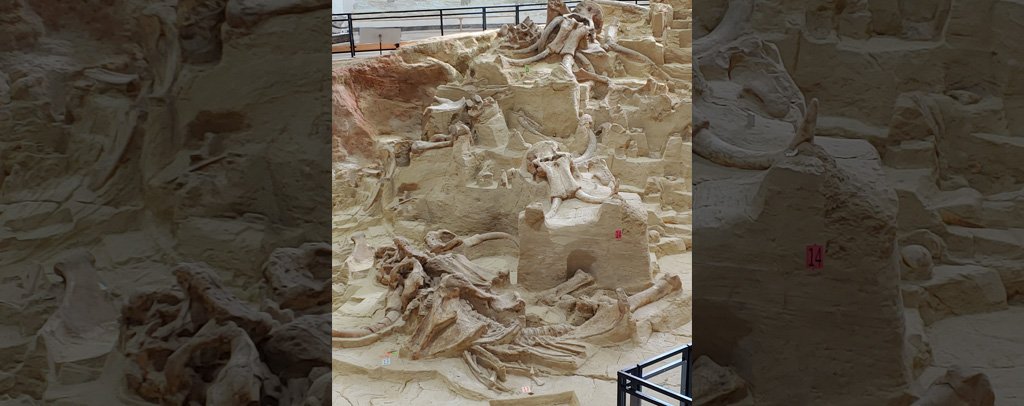
The Mammoth Site in Hot Springs is not a museum that moved fossils into display cases. The museum was built around the fossils. Beneath its roof lies the ancient sinkhole where dozens of mammoths and other Ice Age animals died, with many of their bones still exposed in the ground where excavators found them.
The site came to light in 1974 when heavy equipment operator George Hanson was grading land for a housing development and struck a large tusk. Instead of becoming another subdivision, the property became a protected paleontological site. Excavation and research have continued for decades, turning the original discovery into one of the most remarkable fossil displays in the country.
More than sixty mammoths have been identified there, mostly Columbian mammoths along with a small number of woolly mammoths. The site also contains remains from many other Late Ice Age animals. Visitors walk around the active dig area on elevated pathways, looking down at ribs, tusks, skulls, and partial skeletons embedded across the former sinkhole.
What makes the place unusual is the scale and immediacy. There is no need to imagine where the bones came from because the death trap itself is part of the exhibit. The building protects a slice of ancient landscape while scientists continue to study it. The Mammoth Site is open year-round, making it possible to stand indoors in modern Hot Springs while looking directly into a natural disaster that trapped animals thousands of years before the town existed.