
About Rock Eagle Effigy Mound
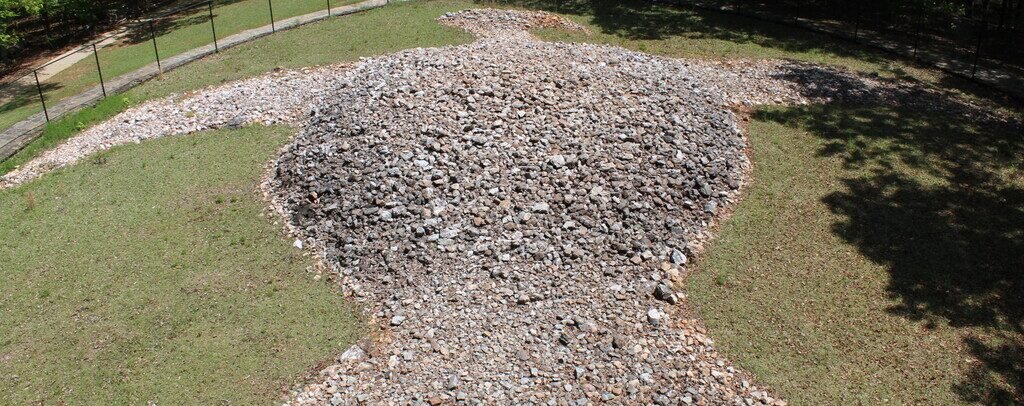
Thousands of pieces of quartzite form a huge bird on the ground near Eatonton. The stone body measures about 102 feet from head to tail and roughly 120 feet across its wings, yet the figure is difficult to understand from ground level. Its full shape becomes clear from the observation tower beside it.
Archaeologists agree that Indigenous people built the effigy, but its exact age and purpose remain uncertain. Estimates often place its construction somewhere between 1000 BC and AD 1000. The familiar name identifies the bird as an eagle, although no one knows whether its builders intended an eagle, another bird, or a symbolic creature that cannot be matched to a modern species.
The mound rises as much as ten feet and contains an immense quantity of stone. Georgia has another large bird-shaped stone effigy called Rock Hawk, but such features are rare in the Southeast. That scarcity makes Rock Eagle an archaeological puzzle, especially because later cultures left no surviving explanation of the figure’s meaning.
A fence protects the stones from foot traffic and disturbance. A paved path circles the mound, and interpretive signs introduce its archaeological importance. The nearby stone tower, built during the 1930s, provides the essential overhead view. Visitors should expect stairs if they want the clearest perspective.
The University of Georgia administers the surrounding property as the Rock Eagle 4-H Center. Cabins, educational buildings, and environmental programs now occupy the larger wooded campus. The effigy remains the center’s defining symbol and gives the modern facility a connection to a landscape shaped long before the current camp existed.
Rock Eagle is compelling because it hides in plain sight. From the path it resembles a broad heap of pale stones, but from above it becomes a deliberate animal stretching across the earth. Its unknown maker, uncertain date, and unexplained purpose leave visitors with a rare experience: a monumental object that can be seen clearly but not fully decoded.