
About Providence Canyon
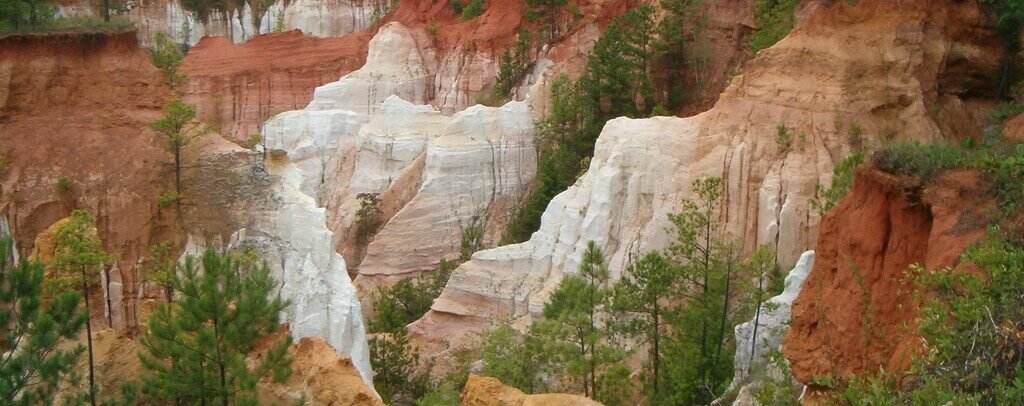
Providence Canyon cuts a maze of red, orange, pink, and white gullies into the quiet farmland of southwest Georgia. Some walls plunge more than 150 feet, creating scenery dramatic enough to earn the nickname Georgia’s Little Grand Canyon. The exposed layers glow differently as sunlight moves across the cliffs.
The strangest part of the canyon is its origin. Natural erosion played a role, but destructive farming practices greatly accelerated the gullies during the 1800s. Settlers cleared vegetation and plowed fragile soil without modern erosion controls. Rainwater followed the furrows, cut channels into the ground, and gradually opened wounds large enough to become a celebrated state park.
Trails lead to rim overlooks and down toward the canyon floor. The lower route may require walking through shallow water because drainage continues to reshape the gullies. Visitors are asked not to climb the delicate walls, where a small step can damage formations and loose soil can create hazardous footing.
The park also preserves a line of rusting cars and trucks from a former homestead. Officials left the vehicles in place because removing them would cause additional environmental damage. Trees now grow through and around the metal, adding an unexpected automotive ruin to a landscape already defined by the consequences of human activity.
Providence Canyon protects rare plants as well as striking geology. The plumleaf azalea, known for its deep red summer blossoms, grows in the area. The changing vegetation, wet canyon floor, and exposed mineral colors make the experience vary sharply with season and weather.
This is not simply a miniature version of a western canyon. It is a vivid monument to accidental landscape design, where poor land management produced something visually beautiful and environmentally cautionary. The park turns a historic agricultural failure into a place for hiking, photography, and reflection on how quickly people can alter the ground beneath them.