
About Phineas Gage
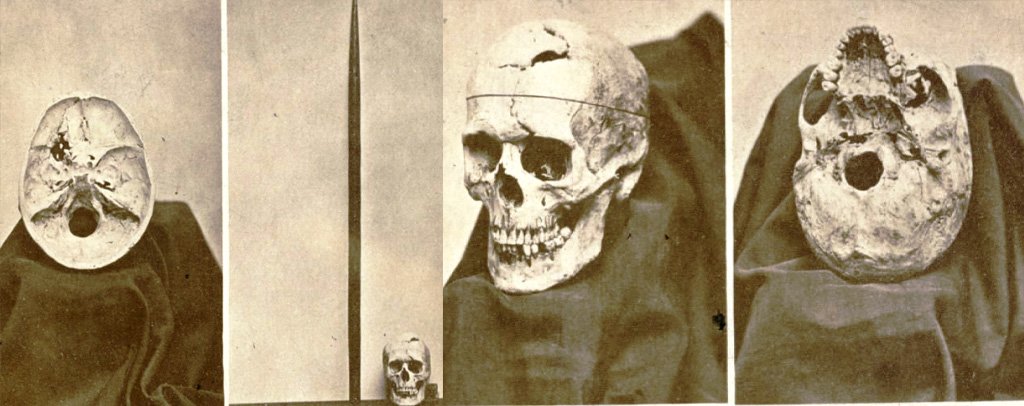
In 1848, railroad foreman Phineas Gage survived an accident that should have been unsurvivable. An explosion drove an iron tamping rod through his head. The rod entered through his face, passed through the front portion of his skull, and exited above. Gage remained alive and became one of the most famous cases in the history of neuroscience.
The Warren Anatomical Museum collection at Harvard preserves the physical evidence. Its holdings include Gage’s skull, the tamping iron, and a life cast of his head. The iron is about three feet seven inches long, making the accident difficult to reduce to an abstract medical anecdote once the actual object is in view.
Gage’s case became important because physicians documented changes observed after his injury and later generations connected the case to questions about the brain, personality, and behavior. Some popular retellings exaggerate what can be concluded from nineteenth-century reports, but the case remains historically significant because it forced physicians to confront the relationship between brain injury and changes in a person’s functioning.
The Warren collection is associated with Harvard’s Countway Library and Center for the History of Medicine. Public exhibit access is more limited than ordinary library hours, so visitors should check the current public-hours page before going. The display is unusual not because it treats injury as spectacle, but because the actual skull and iron behind a foundational medical case have survived together.