
About Old New-Gate Prison and Copper Mine
Old New-Gate began as an early eighteenth-century copper mine cut into the side of Talcott Mountain. After the mining venture struggled, Connecticut found a grim new use for its tunnels: prisoners were confined underground in damp caverns reached through vertical shafts.
The colonial government converted the mine into a prison in 1773. During the Revolutionary era, it held convicted criminals and Loyalists. Captives slept below ground in darkness, while guards and workshops occupied the surface. The place earned a reputation for misery, rebellion, fire, and repeated escapes.
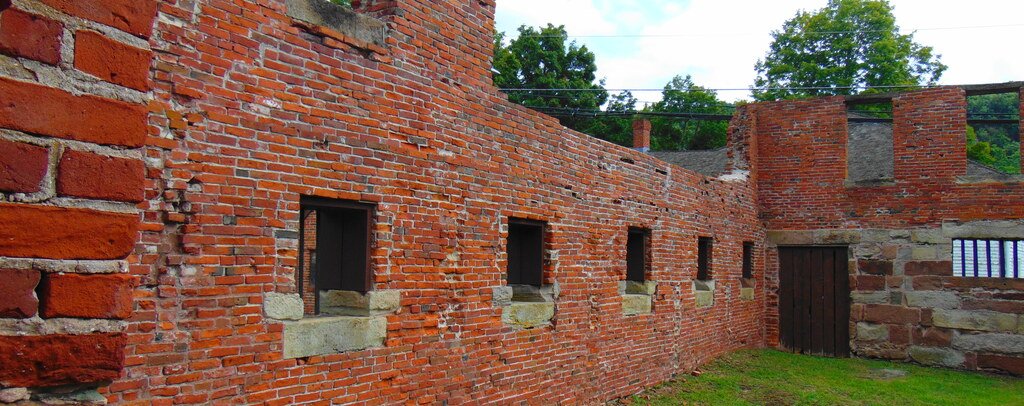
Prisoners sometimes worked at nail making and other trades, but discipline remained severe. A 1781 escape reportedly involved more than twenty men. After surface buildings burned, stone walls and stronger structures were added, creating the ruined prison yard that survives above the older mine passages.
The prison closed in 1827 as ideas about incarceration changed. The state later preserved the complex as an archaeological site and museum. Visitors can explore the roofless masonry, exhibitions, and, when tours are offered, descend into sections of the former copper mine.
Visitor info: The museum operates seasonally, and mine access depends on scheduled tours and conditions. Wear sturdy shoes and expect cool, damp underground spaces. Check the state museum page for current dates, fees, and accessibility.