
About Mars Desert Research Station
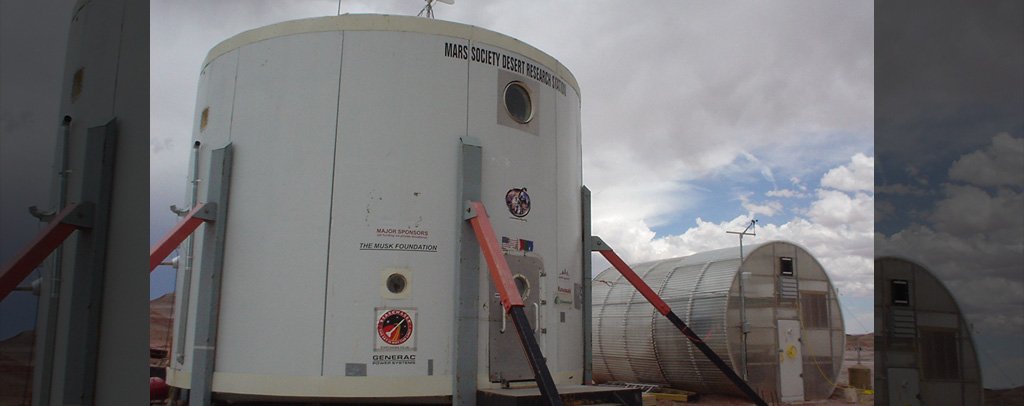
A few miles from Hanksville, a small white habitat sits in barren red terrain while crews in simulated spacesuits conduct fieldwork outside. The Mars Desert Research Station is not a movie set. It is an operating Mars analog facility where researchers and students practice some of the routines that future crews may face on another planet.
The Mars Society established the station in the early 2000s. Its campus includes a two-story cylindrical habitat, a greenhouse known as the GreenHab, observatories, science and engineering spaces, and equipment used during simulated missions. Crews live at the station for limited rotations and conduct research while following operational restrictions designed to make daily life more Mars-like.
Participants may work in spacesuits during outside activities, operate rovers, conduct geological or biological studies, maintain life-support systems, and test procedures for isolated field operations. The surrounding Utah desert provides terrain that visually and practically supports the simulation.
The station is private research property and is not open for public tours. The Mars Society says travelers may view the campus from Cow Dung Road where parking is allowed, but visitors must not enter the research area or interfere with crews. That restriction somehow makes the sight stranger. A person can drive through rural Utah and look across the desert at what appears to be a small colony preparing for life on another planet.