
About Mammoth Spring
At the edge of the Missouri border, an immense volume of cold water rises from the ground and immediately forms a lake and river. Mammoth Spring is Arkansas’s largest natural spring and one of the largest in the world. Roughly nine million gallons can emerge from its underground system every hour.
The water begins as rainfall across southern Missouri. It sinks through cracks and sinkholes in the region’s limestone, travels through an underground network, and resurfaces in Arkansas. Dye tracing has helped researchers connect parts of the hidden drainage system to the spring.
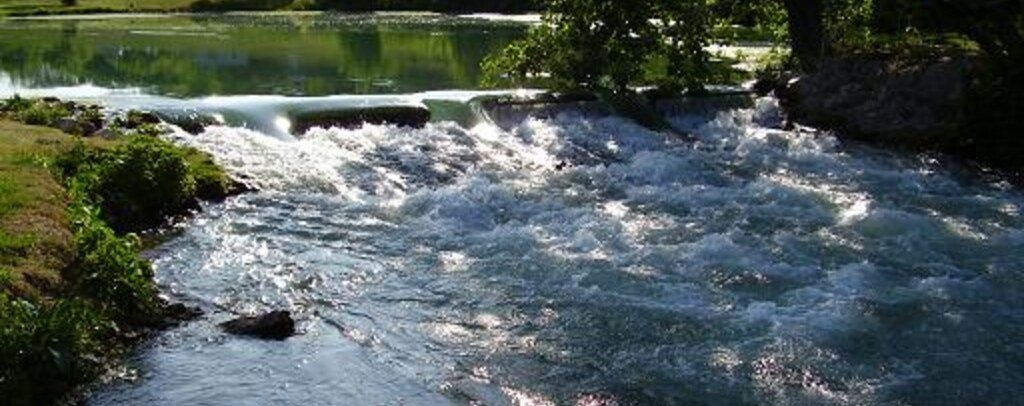
The spring creates a ten-acre lake before spilling over a dam and becoming the Spring River. The dependable flow and cool temperature support fishing and floating even when other regional waterways run low. The powerful current once supplied energy for mills and a hydroelectric plant.
Mammoth Spring State Park preserves the spring along with remnants of its industrial and transportation history. Visitors can see the old hydroelectric plant, walk around the lake, and tour a restored 1886 railroad depot when the museum is open.
The park and visitor center are located along Highway 63 in the town of Mammoth Spring. General park access is free. Museum schedules and interpretive programs vary by season, so visitors should check current information before traveling.
There is no geyser and no dramatic explosion. The oddity is the relentless scale of the flow. A river seems to begin fully formed beneath a quiet blue pool, powered by a landscape-sized plumbing system hidden under the Ozarks.