
About Jumbo at Tufts
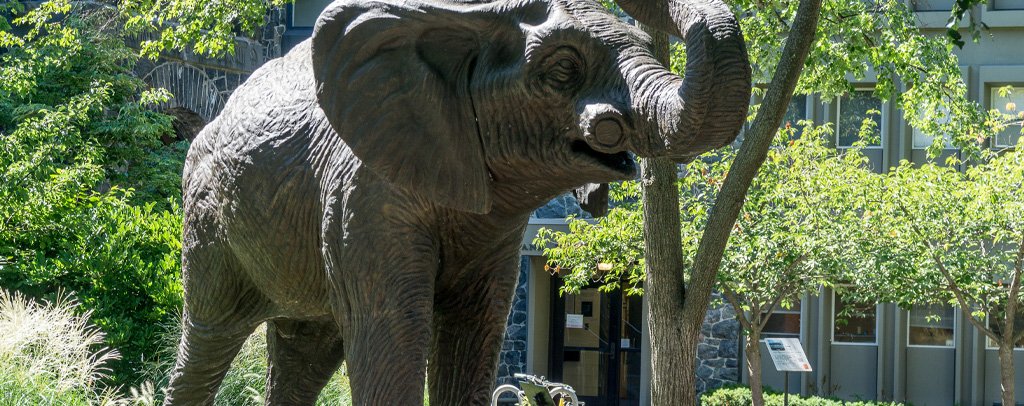
A nearly life-size bronze elephant stands outside Barnum Hall at Tufts University. The sculpture is impressive on its own, but the strange part is why this particular elephant became the university’s mascot and what happened to the original remains kept on campus.
Jumbo was a famous nineteenth-century elephant exhibited first in London and later by showman P. T. Barnum, a Tufts trustee and benefactor. After Jumbo died in 1885, Barnum donated the elephant’s preserved hide to Tufts. The mounted animal was displayed in Barnum Hall and gradually became inseparable from the university’s identity.
Then Barnum Hall burned in 1975. The preserved Jumbo was destroyed, but university lore did not end with the fire. Tufts accounts describe ashes recovered from the remains and kept in a glass jar, while the elephant’s tail had already become separated from the mount and survived elsewhere in university collections. The modern bronze statue, installed in 2015, gives Jumbo a much more fire-resistant presence on the Academic Quad.
The statue is outdoors in front of Barnum Hall at 163 Packard Avenue and is part of the university’s public art collection. Visitors should follow campus parking and access rules. The ash jar and surviving tail are institutional artifacts, not guaranteed public exhibits, so the bronze Jumbo is the dependable stop. Its backstory supplies more than enough oddity without pretending every relic can be casually viewed.