
About Heart Mountain Interpretive Center
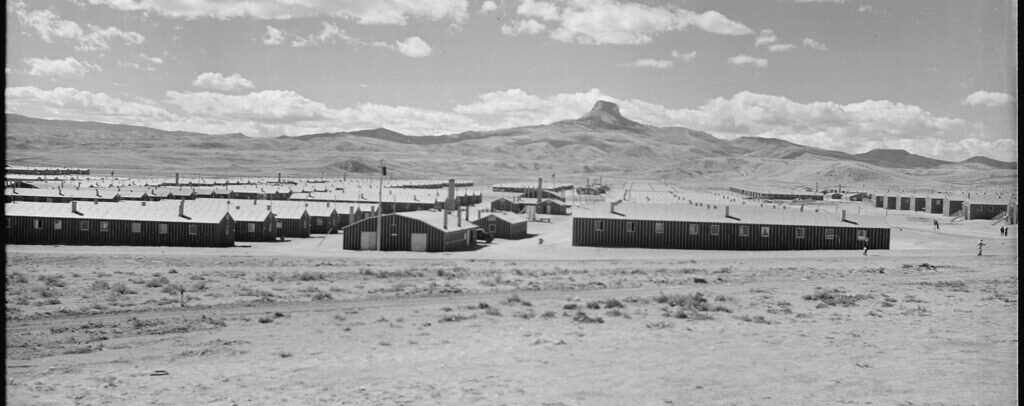
At the foot of a stark mountain in northern Wyoming, the Heart Mountain Interpretive Center preserves the site of one of the country’s largest World War II incarceration camps. More than 14,000 Japanese Americans passed through Heart Mountain between 1942 and 1945 after being forcibly removed from their homes.
The camp was built rapidly on an exposed plain surrounded by barbed wire and guard towers. Families lived in hastily constructed barracks through bitter winters and dusty summers. Despite those conditions, incarcerees created schools, farms, newspapers, clubs, and religious communities.
The interpretive center combines photographs, documents, personal objects, reconstructed rooms, and survivor testimony. Outside, visitors can see original camp features, including a hospital boiler house, root cellar, and portions of the administrative complex. The dramatic mountain looming behind the site creates a setting that is beautiful and deeply unsettling.
Heart Mountain is not a playful roadside attraction. Its place in the directory comes from the eerie contrast between the isolated landscape and the temporary city once built there to imprison American families without individual trials.
Why it’s weird: A remote Wyoming plain became a guarded city of more than 10,000 people, complete with schools and farms, because the federal government incarcerated families based on ancestry.
Visitor info: The center is between Cody and Powell. Review current hours and admission information before visiting, and approach the site with the respect expected at a place of confinement and remembrance.