
About Hālona Blowhole
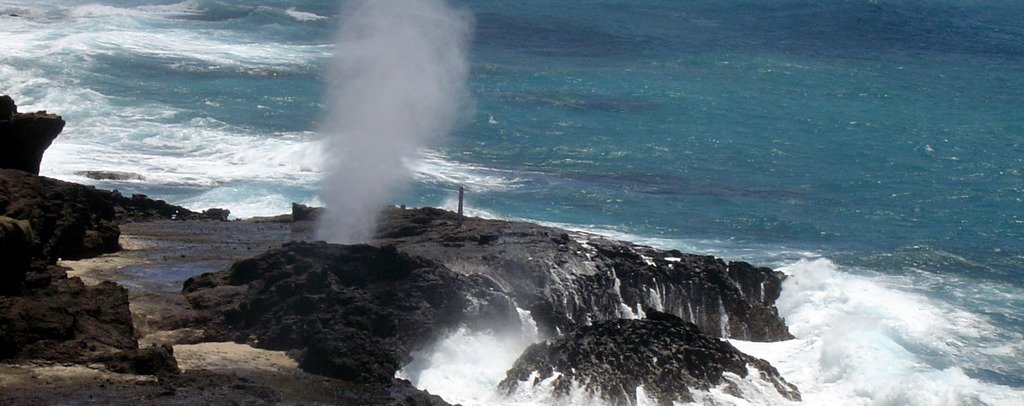
At Hālona Point on Oʻahu’s southeastern coast, waves can make the rocks appear to breathe. Water driven into an old lava tube is compressed beneath the shoreline and forced upward through a narrow opening. The result is a sudden plume of seawater that erupts like a coastal geyser.
The blowhole formed within volcanic rock produced by ancient eruptions of the Koʻolau range. Cracks and tubes in the hardened lava created a hidden route from the ocean to the surface. When the direction, tide, wind, and size of incoming waves align, pressure sends spray high above the opening.
No two eruptions are exactly alike. During calm conditions, the blowhole may produce little more than mist or a hollow rush of air. Strong swells can create dramatic bursts visible from the lookout. That unpredictability is part of the attraction, although it also tempts some visitors to move dangerously close.
The designated overlook is the proper place to watch. The rocks below are steep, sharp, slippery, and exposed to waves that can arrive with far more force than expected. People have been seriously injured around blowholes by sudden surges and by entering openings that seem quiet. Barriers and warning signs should be respected.
Nearby Hālona Cove is a small sandy inlet framed by lava rock, and the lookout offers broad views of the coast. In winter, visitors may also spot humpback whales offshore. The area’s scenery has appeared in several films, but the ocean remains the main performer.
Hālona Blowhole turns ordinary wave energy into a brief vertical explosion. Nothing mechanical controls the timing, height, or sound. Visitors simply wait for the right wave and watch a tunnel in ancient lava redirect the Pacific Ocean toward the sky.