
About Gillette Castle
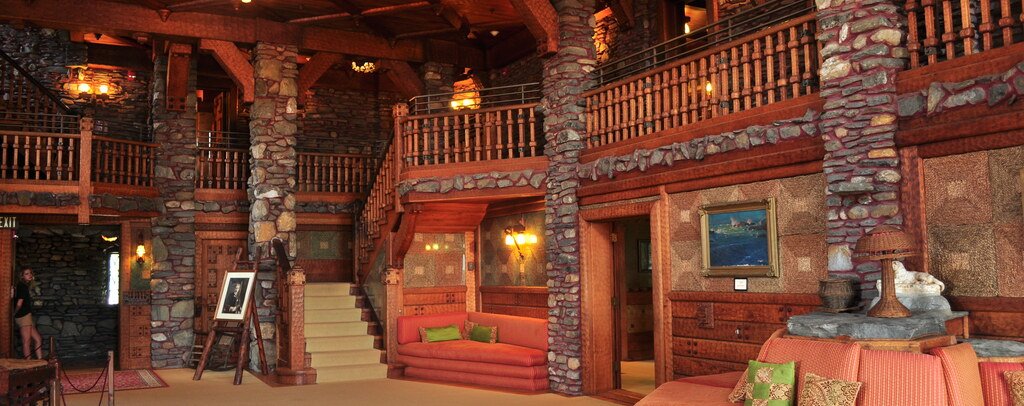
High above the Connecticut River, Gillette Castle resembles a medieval fortress assembled from rough fieldstone. It was actually the highly personal home of William Gillette, the actor who helped define Sherlock Holmes for the stage and gave the detective his familiar curved pipe.
Gillette designed the house, originally called Seventh Sister, and supervised construction from 1914 to 1919. The exterior is theatrical, but the interior is even stranger. Hand-carved woodwork, built-in furniture, and forty-seven doors with individually designed locking mechanisms turn the mansion into an elaborate mechanical puzzle.
Hidden mirrors allowed Gillette to observe visitors from another room, and a concealed bar could disappear from view. Light switches and latches became sculptures in their own right. The house feels less like an imitation European castle than a stage magician’s private laboratory.
Gillette also built a narrow-gauge railroad around the estate for himself and his guests. The locomotives and most track are gone, but walking paths follow parts of the old route through tunnels, cuts, and stonework. The surrounding state park preserves river views and the actor’s eccentric landscape.
Visitor info: Park grounds are generally open daily, while castle interiors are available only on scheduled tours. Tickets can sell out. Confirm tour dates, fees, and seasonal access on the official Connecticut State Parks page.