
About Gatorland
Gatorland is a wildlife attraction and roadside landmark located in Orlando, Florida, often referred to as the “Alligator Capital of the World.” Covering more than 100 acres, the park is home to thousands of alligators and crocodiles, along with a variety of other animals native to Florida and beyond. While many visitors know Orlando for its large theme parks, Gatorland preserves a distinctly different experience rooted in the traditions of classic roadside attractions.
The attraction was founded in 1949 by Owen Godwin, who recognized that Florida’s alligators fascinated tourists traveling through the state. What began as a small alligator breeding and exhibition facility quickly evolved into one of Florida’s most popular attractions. Decades before the arrival of many of Orlando’s larger entertainment destinations, visitors were already stopping at Gatorland to see enormous reptiles up close.
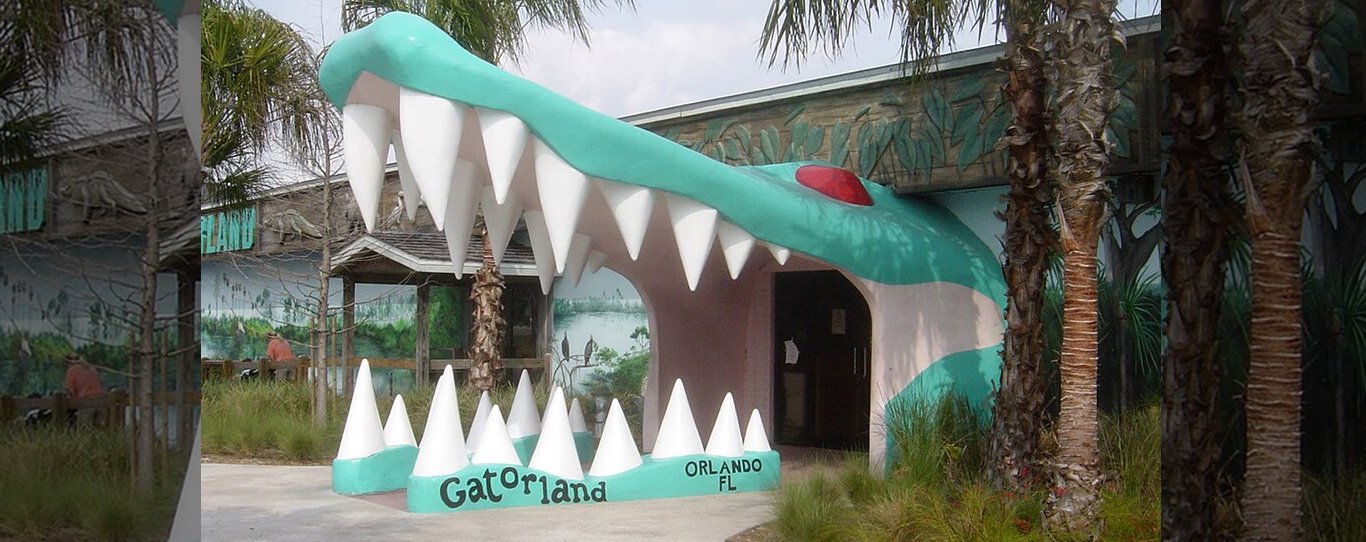
One of the park’s most recognizable features is its giant alligator-mouth entrance. Added in the 1960s, the oversized structure became a landmark in its own right and remains one of the most photographed entrances in Florida. The massive jaws create a dramatic gateway that perfectly captures the playful roadside architecture popular during the automobile tourism boom.
Inside the park, visitors encounter alligators ranging from hatchlings to enormous adults. The attraction also gained national attention for its collection of rare leucistic alligators, animals with a striking white appearance caused by a genetic condition. These unusual reptiles became some of the park’s most famous residents and helped distinguish Gatorland from other wildlife attractions.
Beyond the reptiles themselves, Gatorland serves as a living example of “Old Florida” tourism. Rather than relying primarily on elaborate rides or fictional characters, the attraction focuses on wildlife, conservation, and hands-on experiences. Generations of visitors have watched feeding demonstrations, explored boardwalks, and learned about the ecology of alligators and crocodiles.
The park has survived changing tourism trends, economic downturns, and even a major fire that damaged portions of the property in 2006. Through restoration efforts and continued operation, Gatorland remained an independent attraction while much of the surrounding region transformed into one of the world’s largest entertainment destinations.
Today, Gatorland continues to blend wildlife education, conservation, and roadside nostalgia. Its giant alligator-mouth entrance and long history make it more than just a wildlife park—it is one of Florida’s most recognizable oddities and a surviving piece of mid-century roadside Americana.