
About Desert of Maine
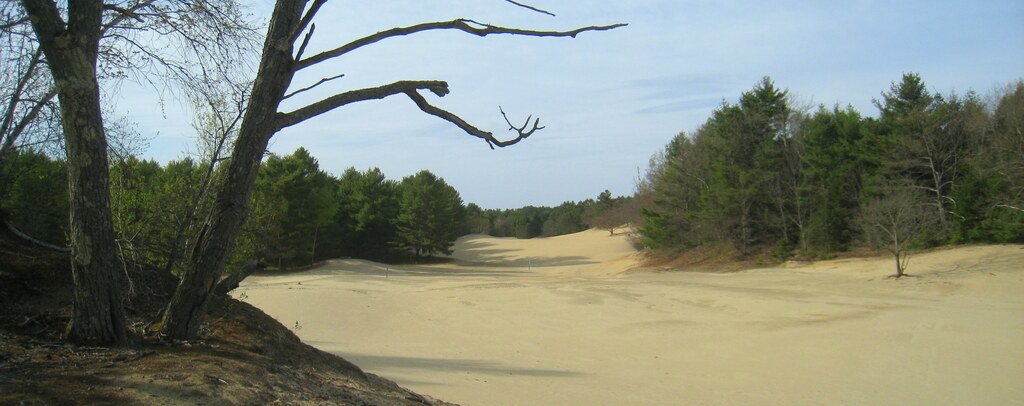
Maine is known for forests, rocky coastlines, snow, and enough water to make the word “desert” sound ridiculous. Then there is a patch of Freeport where broad dunes roll between the trees and a nineteenth-century farm seems to have been swallowed by sand.
The Desert of Maine is not a true desert in the climatic sense. Rainfall is far too high. Its sand is a glacial deposit left behind by geological processes thousands of years ago. For generations it remained hidden beneath ordinary soil. In the 1800s, the Tuttle family established a farm on the property and raised crops and sheep above that buried layer.
Decades of intensive farming and grazing removed enough topsoil for the sand beneath to begin appearing. Small exposed patches grew larger until the farm landscape was transformed. The family eventually left, and what had been an agricultural problem became an attraction. Visitors came to see the startling sight of pale dunes surrounded by green Maine forest, and the property developed into the roadside destination that operates today.
Modern interpretation focuses heavily on the actual geology and ecology rather than pretending Maine somehow acquired a Sahara. Visitors can walk the dunes, examine glacial material, watch forest reclaim sections of the landscape, and explore exhibits connected to the old farm. The attraction is seasonal, so current hours should be checked before traveling. The real story is stranger than a fake desert would be: the sand was there all along, waiting under a working farm for the soil above it to disappear.