About Cathedral Caverns
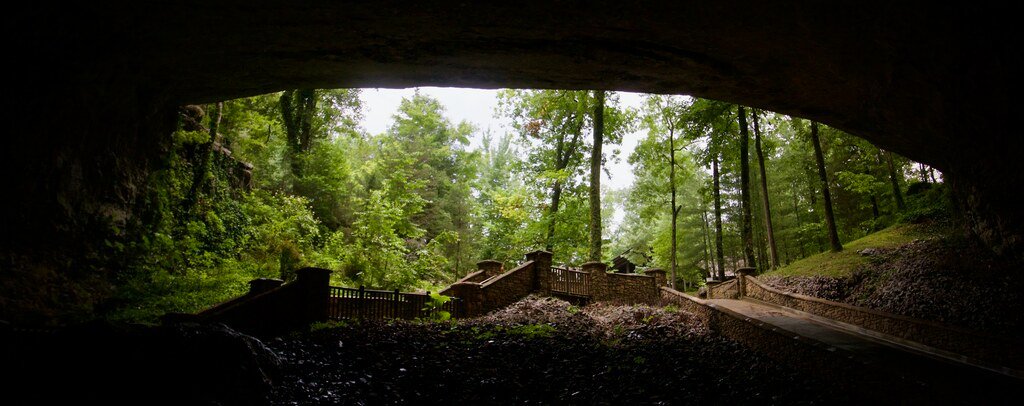
A cave mouth roughly 126 feet wide and 25 feet high opens into the wooded hills of northern Alabama. Beyond it lies an underground landscape of enormous rooms, flowstone formations, a mysterious river, and a stalagmite known as Goliath. Cathedral Caverns earned its name from chambers so large and ornate that their stone columns resemble the architecture of a vast subterranean church.
The cave was originally known as Bats Cave and was developed as a private attraction by Jacob “Jay” Gurley during the 1950s. Gurley renamed it Cathedral Caverns to better reflect the scale and appearance of its interior. Alabama purchased the property in 1987, completed extensive improvements, and reopened it as a state park in 2000.
Goliath is the cavern’s most famous formation. The massive stalagmite rises approximately 45 feet and measures about 243 feet around its base, placing it among the largest known stalagmites in the world. Nearby formations include a frozen flowstone “waterfall,” dense forests of stalagmites, and an improbably thin formation that rises at an angle toward the ceiling.
The developed route extends approximately 3,500 feet into the cave along a concrete walkway. The public rooms include spaces hundreds of feet long and wide, while thousands of additional feet have been surveyed beyond the regular tour. A waterway called Mystery River passes through the system and can cause flooding after heavy rain.
Archaeological evidence shows that people used the cavern entrance thousands of years ago. Its enormous shelter, stable temperature, and access to water made it a natural gathering place long before it became a roadside attraction or state park.
Visitors may enter only as part of a guided tour, and advance reservations are recommended. The cave’s constant cool temperature makes a jacket useful even during Alabama summers. Cathedral Caverns belongs in the Oddity Almanac not simply because it is beautiful, but because nearly every major feature,from the entrance to Goliath,appears built on an impossible scale.