
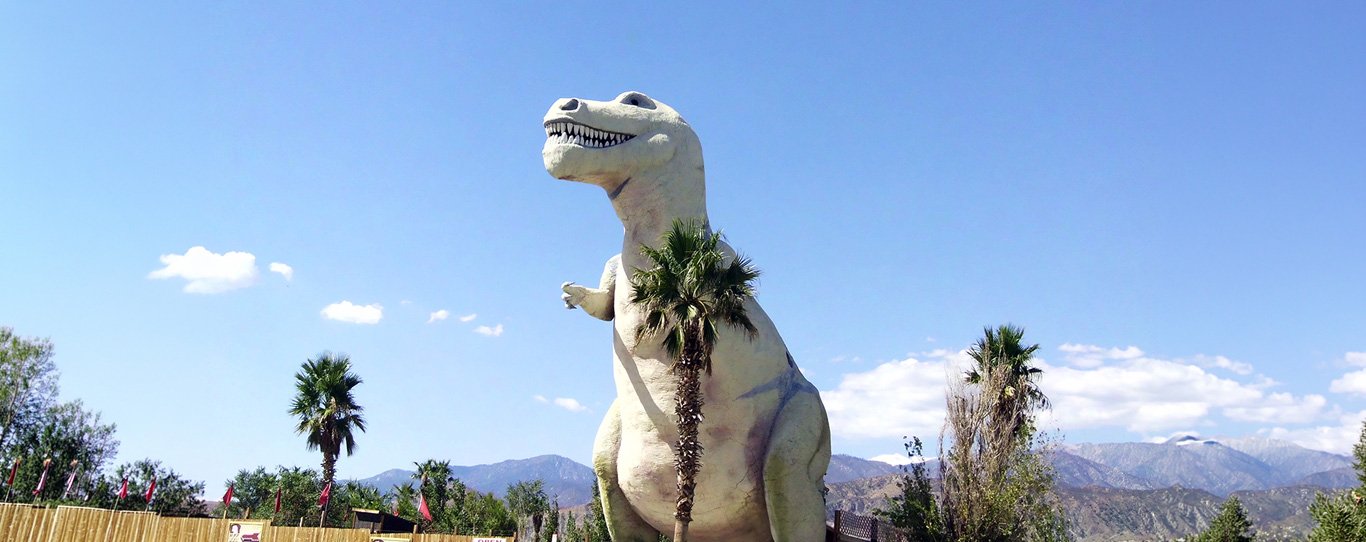
About Cabazon Dinosaurs
The Cabazon Dinosaurs are a pair of enormous concrete dinosaur sculptures located beside Interstate 10 in Cabazon, California. Rising above the desert landscape near Palm Springs, the towering creations have become one of the most recognizable examples of classic American roadside architecture, a place where imagination, advertising, and roadside tourism collide.
The dinosaurs were created by Claude K. Bell, an artist and businessman who operated the nearby Wheel Inn Restaurant. Construction of the first dinosaur, a massive sculpture of an Apatosaurus named Dinny, began in 1964. Bell spent more than a decade building the structure using steel reinforcement and concrete, creating what became one of the largest dinosaur sculptures in the world at the time.
Dinny was eventually joined by a second giant dinosaur, a Tyrannosaurus rex named Mr. Rex, which was completed in 1986. Unlike Dinny, which was built large enough to contain interior spaces, Mr. Rex was designed as a more traditional sculpture. Together, the two dinosaurs created a striking landmark visible to thousands of motorists traveling along Interstate 10.
The original purpose of the dinosaurs was closely tied to roadside business. Bell used the enormous sculptures to attract visitors to the Wheel Inn Restaurant, where travelers could stop for food and photographs. Like many roadside attractions of the twentieth century, the Cabazon Dinosaurs relied on the idea that something unusual could turn an ordinary highway stop into a memorable destination.
After Bell’s death in 1988, ownership of the property changed, and the dinosaurs took on a new identity as a tourist attraction. Today, visitors can explore portions of the sculptures, climb inside Dinny, and visit exhibits connected to the site’s dinosaur theme.
The Cabazon Dinosaurs represent an important chapter in American roadside culture. They are not ancient fossils or museum specimens, but imaginative works of concrete art created specifically to capture attention and spark curiosity. Their enormous size, unusual location, and connection to highway travel have made them a lasting symbol of the strange and creative destinations found along America’s roads.