
About Bruneau Dunes
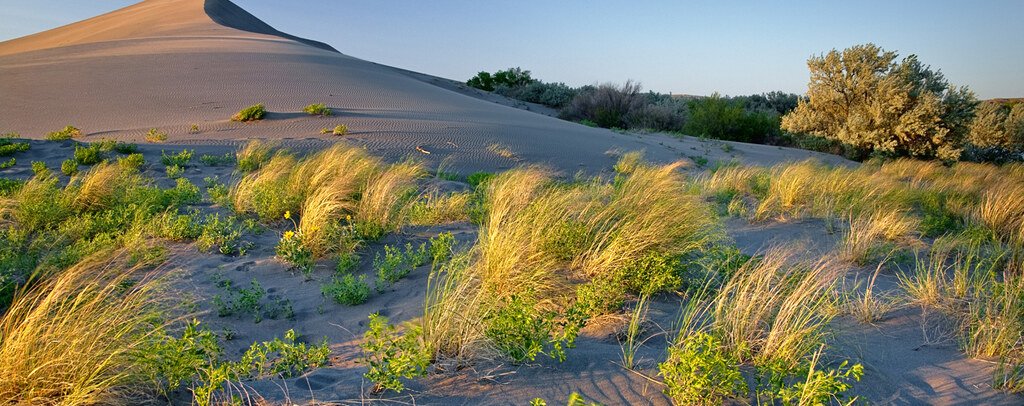
Bruneau Dunes State Park contains a mountain of sand in a place where no ocean shoreline exists. Its tallest dune rises about 470 feet above the surrounding basin and is often described as the tallest single-structured sand dune in North America. Two small lakes at its base make the desert setting even more unexpected.
Most dune fields slowly migrate as prevailing winds push sand in one dominant direction. At Bruneau, winds arrive from opposing directions and trap sand near the center of the basin. The dunes remain unusually stable instead of traveling steadily across the landscape.
The sand may have begun accumulating after the Bonneville Flood swept through the region thousands of years ago. Since then, the basin has functioned as a natural collector. Wind continues to reshape the dune surfaces while the overall mass remains anchored in roughly the same place.
Visitors can climb the dunes, hike around the lakes, camp, watch birds, and ride sandboards down the slopes. Motorized vehicles are not allowed on the sand, which preserves the broad faces of the dunes for foot travel and sledding. The climb is strenuous because every step sinks backward.
The park also operates an astronomical observatory during scheduled seasons. Dark desert skies and distance from major cities create strong viewing conditions. Observatory programs, equipment rentals, water availability, and seasonal services can change, so the official Idaho State Parks page should be checked before arrival.
Bruneau combines several landscapes that do not seem to belong together: towering sand, freshwater lakes, marsh habitat, and a public observatory. The result is both a geological oddity and a natural playground, with a dune large enough to dominate the horizon from almost every part of the park.