
About Big Well
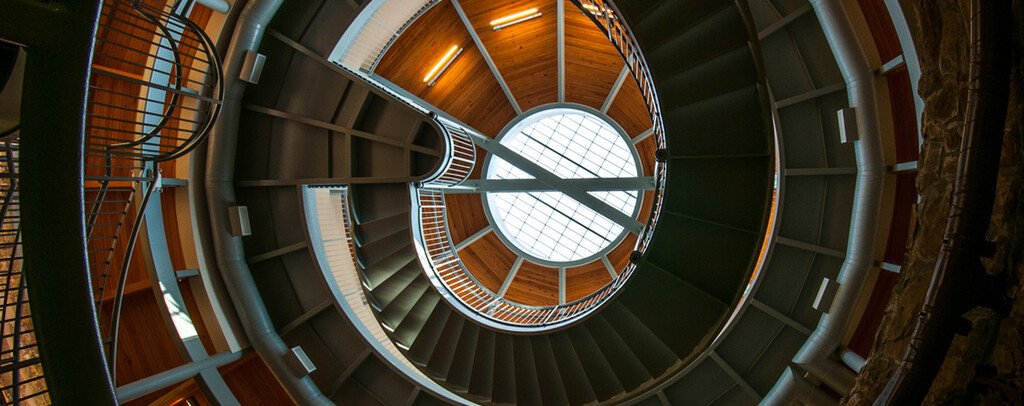
The Big Well is a stone-lined shaft wide enough to contain a spiral staircase and deep enough to swallow a ten-story building. Completed in 1888, it measures about 32 feet in diameter and 109 feet deep. Visitors enter the structure and circle downward along the wall, watching the daylight above shrink into a distant round opening.
Greensburg needed a dependable water supply for residents and steam locomotives, so crews began digging in 1887. Workers used picks and shovels, hoisted soil in barrels, and installed temporary braces as the hole deepened. Native stone was fitted by hand to line the walls. The completed well supplied the community until 1932.
The site later became a tourist attraction and was listed on the National Register of Historic Places. Its original museum stood beside the well until an EF5 tornado devastated Greensburg in 2007. The well survived below ground, while the visitor center and much of the city above it were destroyed.
A new museum opened in 2012 around the preserved shaft. Exhibits tell the story of the well, the tornado, and Greensburg’s rebuilding effort. The collection also includes a massive pallasite meteorite found in the region. That object was recovered from the wreckage after the storm, adding another unlikely survival story to the site.
The Big Well Museum is at 315 South Sycamore Street in Greensburg. Admission is required, and hours or rates may change, so the official website should be checked before visiting. Guests who descend should expect stairs and a noticeable drop into a cool, enclosed space, though museum exhibits remain available above ground.
A water well is usually a narrow opening hidden beneath a cover. This one is a cavernous public room built by hand, entered on foot, and wrapped in a spiraling staircase. The combination of human labor, extreme depth, tornado survival, and a nearby space rock makes the Big Well far stranger than its practical name suggests.