
About Beer Can House
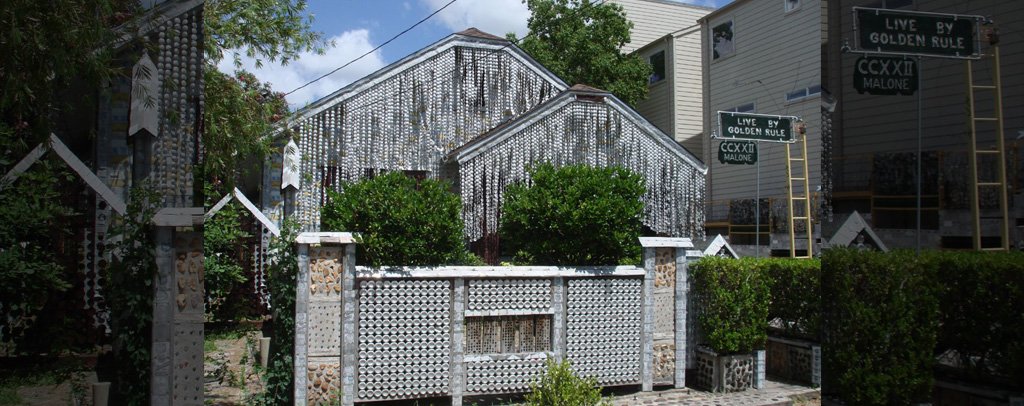
In 1968, retired upholsterer John Milkovisch began transforming his Houston property with the kind of project that tends to get out of hand in the best possible way. After covering much of the yard with concrete, stone, marbles, and other materials, he moved on to the house itself and began applying flattened beer cans to the exterior.
The project eventually consumed an estimated 50,000 cans. Aluminum siding made from cut and flattened cans covers large portions of the building, while garlands made from can tops and pull tabs hang from the roofline. Bottle caps, pieces of metal, and other reused materials fill additional surfaces. When wind moves through the hanging aluminum strands, the house produces its own metallic sound.
Milkovisch reportedly did not consider himself an artist. He simply enjoyed working on the property and disliked throwing away useful material. That practical impulse gradually produced one of Houston’s most famous folk-art environments, where the same disposable object is repeated thousands of times until it becomes architecture.
The Orange Show Center for Visionary Art now preserves the Beer Can House and opens it to visitors on designated days. It remains a remarkable example of what can happen when one homeowner decides ordinary siding is unnecessary and an enormous supply of empty beer cans is not trash.