
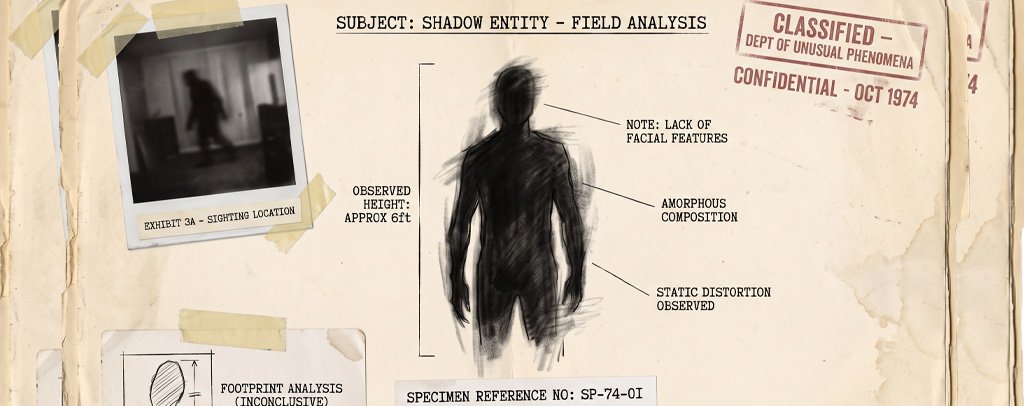
Shadow People are dark, human-shaped figures reported in homes, bedrooms and other dimly lit places. Unlike traditional apparitions, they usually have few recognizable features. Witnesses describe silhouettes darker than the surrounding room, often seen for only a moment before slipping through a doorway, around a corner or simply vanishing.
Some reports describe the figure as child-sized; others make it unnaturally tall. A minority include glowing eyes. One especially persistent variation wears a wide-brimmed hat and has developed into a related legend of its own, usually called the Hat Man.
Humans have told stories about shadowy nocturnal visitors for a very long time, but the modern idea of Shadow People as a distinct paranormal category is much newer. Paranormal radio and the early internet helped consolidate scattered reports into a recognizable phenomenon. Art Bell’s Coast to Coast AM was discussing “shadow beings” and taking listener reports about them by 2001, exposing the idea to a large audience interested in UFOs and the paranormal.
Many Shadow People experiences have an obvious overlap with sleep paralysis. During sleep paralysis, a person can become conscious while the body’s normal REM-related paralysis remains in place. The episode can include vivid visual hallucinations and an overpowering feeling that another person—or something threatening—is standing in the room.
Not every report happens in bed, of course. Peripheral vision, poor lighting, ordinary shadows, expectation and the brain’s tendency to recognize human forms from incomplete information offer explanations for other encounters. Paranormal interpretations range from ghosts to interdimensional entities, but none has been demonstrated.
Shadow People are a good example of folklore forming almost in real time. A simple and frightening experience gained a name, a recognizable set of characteristics and eventually its own mythology.