
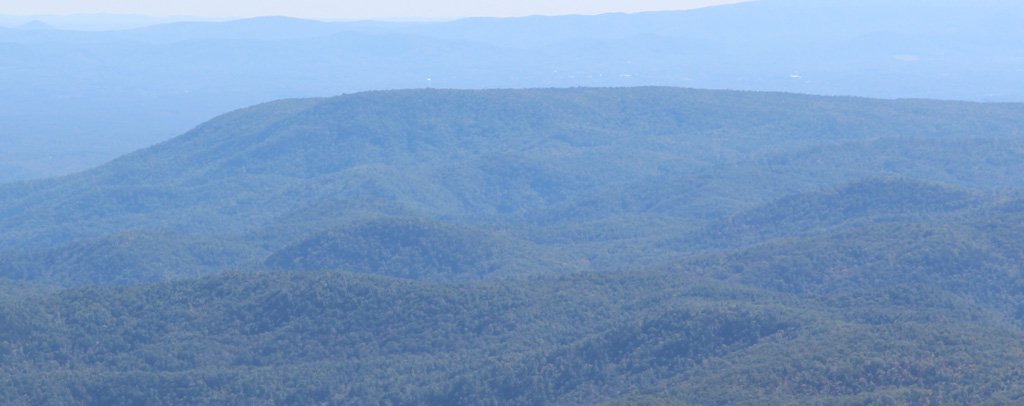
For more than a century, people looking toward Brown Mountain in western North Carolina have reported small lights appearing along or above the ridge. They have been described as white, yellow, orange or reddish points that drift, rise, disappear and sometimes seem to move independently of anything on the ground.
The sightings eventually acquired the usual collection of ghost stories. Depending on the teller, the lights have been described as lanterns carried by lost searchers, spirits wandering the mountains or remnants of some long-ago tragedy. Those stories are part of the folklore surrounding the phenomenon rather than documented explanations for its origin.
The lights became famous enough that the federal government took an interest.
In 1922, the U.S. Geological Survey sent geologist George R. Mansfield to investigate. He studied previous reports, interviewed local residents and made observations from several locations. Mansfield’s conclusion was distinctly unghostly: the lights he was able to investigate could be accounted for by ordinary sources such as automobile headlights, locomotive lights and fires, altered by distance, terrain and atmospheric conditions. He concluded that the Brown Mountain lights were “not of unusual nature or origin.”
That did not end the sightings.
Brown Mountain is viewed across long distances and complicated mountain terrain, often through haze or fog. A light miles away can appear detached from its source, especially at night when few visual reference points are available. Changing roads and development have also created new potential sources over the years.
Still, the phenomenon remains unusually persistent. People continue to visit overlooks hoping to see something moving above the dark ridge, and occasional reports do not fit neatly into a century-old government report.
The Brown Mountain Lights occupy a useful middle ground in paranormal folklore: there really are lights to see in the region. The argument is over what, exactly, people are seeing.