
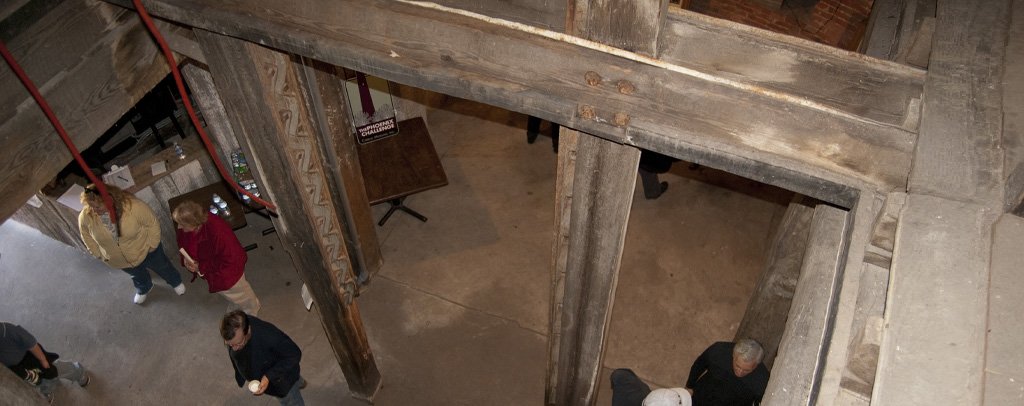
About Phoenix Shot Tower
The Phoenix Shot Tower looks absurdly tall for a brick industrial building because its manufacturing process required one essential ingredient: a very long fall. Workers once carried molten lead to the top, poured it through sieve-like equipment, and let gravity do part of the work of turning the falling metal into round shot.
Built in 1828, the tower rises a little more than 234 feet. Its base is roughly forty feet in diameter, with walls that narrow dramatically toward the top. More than a million bricks went into the structure. According to the Maryland Historical Trust, builders worked from the interior rather than surrounding the tower with conventional exterior scaffolding.
Lead released near the top broke into droplets while falling. The long drop helped the droplets become spherical before they reached cold water at the bottom, where they hardened. The finished shot was dried, polished, sorted, and packed. The Maryland Historical Trust reports that the tower could produce enormous quantities of twenty-five-pound bags before this manufacturing method became obsolete.
Shot production ended in the nineteenth century, but the tower survived while Baltimore’s other shot towers disappeared. It is now a National Historic Landmark and one of the city’s strangest industrial leftovers. Interior access is limited and event-dependent, so visitors should not assume the tower is open. Even from outside, its shape tells the story: the factory had to be tall because the product literally needed room to fall.