
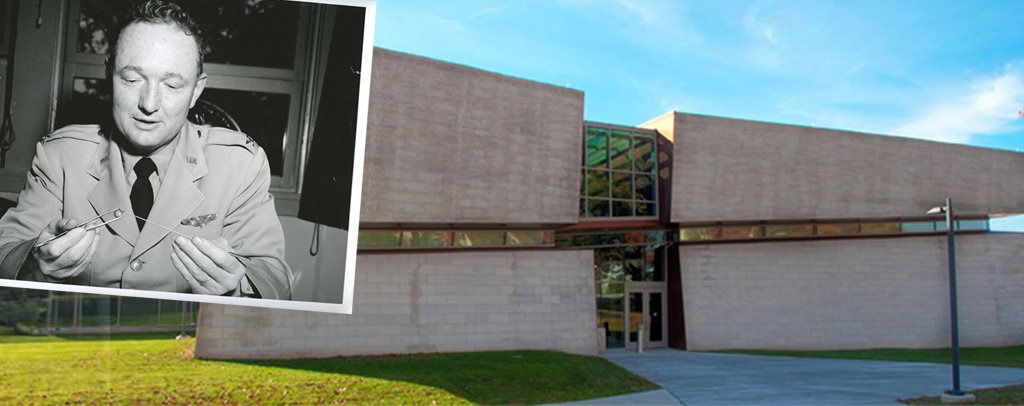
About National Museum of Health and Medicine
The National Museum of Health and Medicine does not soften the physical reality of medical history. Its collections contain bones, preserved tissue, surgical equipment, pathological specimens, battlefield injuries, prosthetics, and objects connected to some of the most famous patients in American history.
Among the museum’s best-known artifacts is the bullet removed from Abraham Lincoln’s brain during his autopsy. The museum also preserves skull fragments and medical instruments connected with the assassination and treatment. These are not reproductions created for dramatic effect. They survived through the institution that began in 1862 as the Army Medical Museum, where physicians were instructed to collect material useful for studying wounds and disease.
Another remarkable specimen comes from Major General Daniel Sickles. A twelve-pound cannonball shattered his right leg at Gettysburg in 1863, and surgeons amputated it. The damaged bones were sent to the museum in a small coffin-shaped box with a calling card. Sickles survived and later visited the preserved remains of his own leg, turning one battlefield injury into one of the museum’s most enduring stories.
The museum’s purpose is scientific and historical rather than sensational. Its unusual material documents how medicine learned from injuries, disease, anatomy, technology, and war. Admission is free, and the current museum is in Silver Spring outside the military installation’s secure area. Check the official site for current hours before visiting. Anyone uncomfortable with real human remains should know what kind of collection they are walking into.