
About American Gothic House
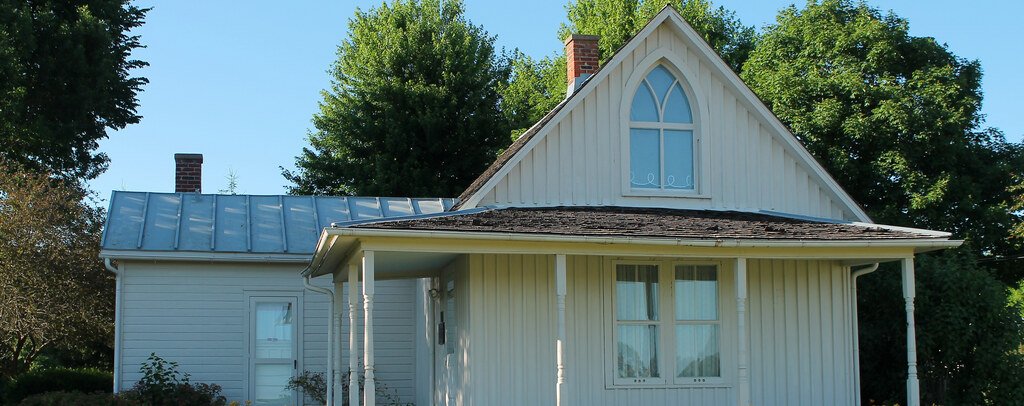
A small white house in Eldon became one of the most recognizable buildings in American art after Grant Wood used it as the background for American Gothic. The house is modest, but its pointed upper window caught Wood’s attention in 1930. He sketched the facade and later placed two stern figures in front of it, creating an image that has inspired generations of admiration and parody.
Local carpenters built the home in 1881 and 1882 for Charles and Catherine Dibble. Its decorative window reflects the Carpenter Gothic style, which adapted medieval-looking details to affordable wooden construction. The building contains only about 500 square feet, making the monumental cultural life of its painted version seem especially out of proportion with the real structure.
Wood did not use the house’s residents as his models. His sister Nan posed for the woman, and his dentist, Dr. Byron McKeeby, posed for the man. Wood painted them separately in his Cedar Rapids studio and imagined the pair as people who might live in such a house. The precise relationship between them was left open to interpretation.
The adjacent visitor center explores the painting, the artist, and the town. It also encourages visitors to make their own version of the famous scene. Costumes and pitchfork props are available, turning the lawn into a steady production line of serious faces, rigid poses, and affectionate imitations.
The center is generally open Wednesday through Sunday, while the exterior can be viewed during posted grounds hours. Admission is free, with donations welcomed. The house is at 300 American Gothic Street, and schedules for interior access or special programs should be confirmed on the official site.
The oddity lies in the distance between the real place and its enormous reputation. Visitors arrive expecting an American icon and find a tiny farmhouse with one unusual window. Then they borrow a pitchfork, stand in the yard, and become part of the painting’s long afterlife.