
About Craters of the Moon
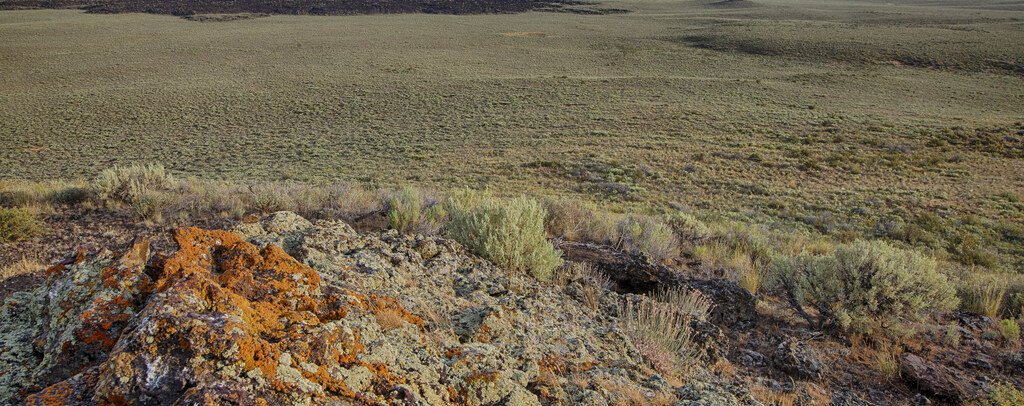
Craters of the Moon spreads across south-central Idaho as a black wilderness of lava flows, cinder cones, fissures, and caves. The landscape appears freshly scorched even though its youngest eruptions ended roughly two thousand years ago. Sparse vegetation and twisted basalt give much of the monument an appropriately lunar appearance.
The volcanic terrain formed along the Great Rift, a long zone of weakness in the Earth’s crust. Repeated eruptions poured basalt across the Snake River Plain, leaving dozens of separate flows and more than twenty-five volcanic cones. The larger protected area now covers an immense section of sagebrush steppe and lava country.
A paved loop road provides access to overlooks and short trails through the developed portion of the monument. Visitors can climb cinder cones, walk beside rough ʻaʻā lava, inspect smooth ropy pāhoehoe, and find tree molds left when molten rock surrounded and burned away trunks.
The caves are lava tubes created when the outer surface of a flow hardened while molten rock continued moving underneath. After the interior drained, tunnel-like chambers remained. Indian Tunnel and Dewdrop Cave may be accessible when conditions allow, but entry requires a free cave permit obtained in person to protect bat populations.
Weather and access change sharply by season. Summer brings heat and intense sun, while winter can bury the lava under snow. Sturdy closed-toe shoes, water, sun protection, and reliable lights are essential for cave exploration. Visitors should check the National Park Service conditions page before traveling.
The monument is not a single crater or extinct volcano. It is a whole volcanic system preserved across a vast, fractured landscape. That scale makes the place feel less like a scenic stop and more like a temporary visit to another planet hidden in the middle of Idaho.