
About Keahiakawelo
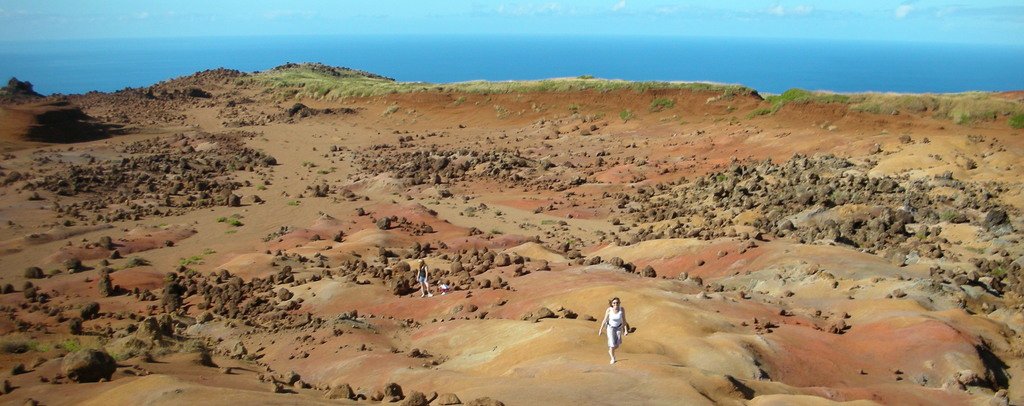
Keahiakawelo spreads across the northwestern uplands of Lānaʻi as a stark field of red earth, scattered boulders, and stone towers. Tourism often calls it the Garden of the Gods, but its Hawaiian name and cultural identity carry far deeper meaning. In the changing light, the ground can shift from ocher to crimson and resemble the surface of another planet.
One traditional account connects the name, meaning the fire made by Kawelo, with a priest who kept a protective fire burning for the people of Lānaʻi. Like many wahi pana, or storied places, the landscape cannot be separated from the narratives, names, and relationships that give it meaning. Visitors should use the Hawaiian name and approach the site respectfully.
The barren appearance is dramatic, but it is not simply an untouched natural desert. Introduced grazing animals damaged much of Lānaʻi’s native dryland vegetation, and wind erosion stripped exposed soil from the uplands. The remaining hardpan, stones, and towers are therefore both beautiful and evidence of major ecological change.
Reaching Keahiakawelo is an adventure of its own. The site lies at the end of a rough unpaved route roughly 45 minutes from Lānaʻi City. A four-wheel-drive vehicle is strongly recommended, and rain can turn the road into deep mud. Travelers should obtain current local directions and never assume a standard rental car can manage the conditions.
There are no services at the site. Visitors need water, sun protection, sturdy shoes, and enough fuel and time for the return drive. Rocks should not be stacked, moved, climbed, or taken. Staying on established routes helps limit further erosion in a landscape already vulnerable to wind and vehicle damage.
Keahiakawelo earns a high Curiosity Rating because it feels both monumental and strangely empty. Its boulders invite imaginative comparisons, yet the real story is more compelling than any invented alien landscape. This is a culturally storied place shaped by volcanic rock, wind, introduced animals, erosion, and generations of Hawaiian memory.