
About Kūkaniloko Birthstones
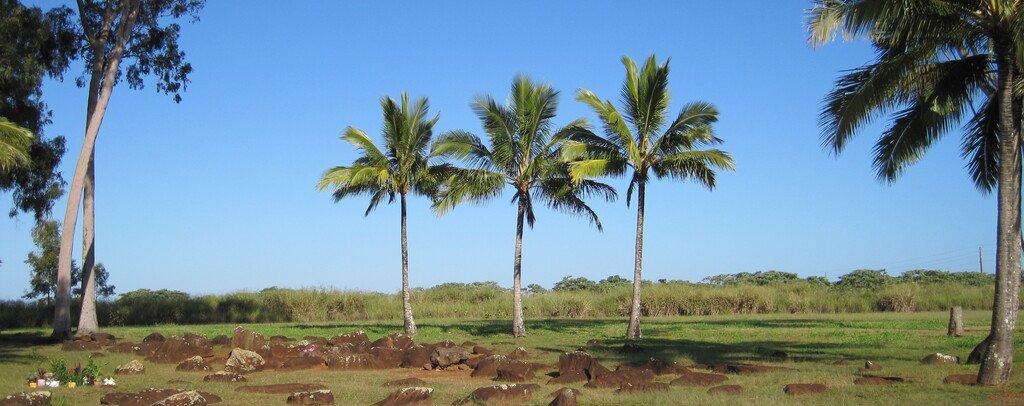
Kūkaniloko is one of Oʻahu’s most important cultural landscapes, a place where stones, genealogy, and chiefly authority are inseparable. For centuries, high-ranking women came to this central plateau to give birth. The site’s name is commonly understood in connection with anchoring the cry from within, reflecting its association with childbirth and the arrival of chiefly descendants.
Traditional accounts identify the site as a royal birth place beginning around the twelfth century. A mother would be supported on specially designated stones while chiefs and attendants witnessed the birth. The ceremony helped establish a child’s genealogy and right to rule, making the landscape part of the political as well as spiritual life of the island.
The surviving stones are not random boulders or archaeological props. They belong to a wahi pana, a storied and sacred place with continuing meaning for Native Hawaiians. Some stones have traditional names and associations, while the wider setting connects views of mountains, pathways, and neighboring cultural features across the central plain.
Modern agricultural development, military activity, traffic, and uncontrolled visitation have altered the surroundings. Stewardship groups have worked to restore native vegetation and protect the site from erosion and disrespectful behavior. Public entry has been closed, and visitors should not cross barriers or treat the stones as seats, stages, or objects to touch.
The site can be viewed from outside the boundary near the intersection of Kamehameha Highway and Whitmore Avenue. Anyone considering a visit should check the Office of Hawaiian Affairs for current access information and respect all posted restrictions. A roadside glimpse is not an invitation to enter without authorization.
Kūkaniloko belongs in the Oddity Almanac because few landmarks unite physical stones with childbirth, genealogy, ceremony, and governance so directly. Its unusual character should never eclipse its dignity. The most meaningful way to encounter it is to understand why the stones matter and to accept that preservation sometimes requires distance.