
About Punaluʻu Black Sand Beach
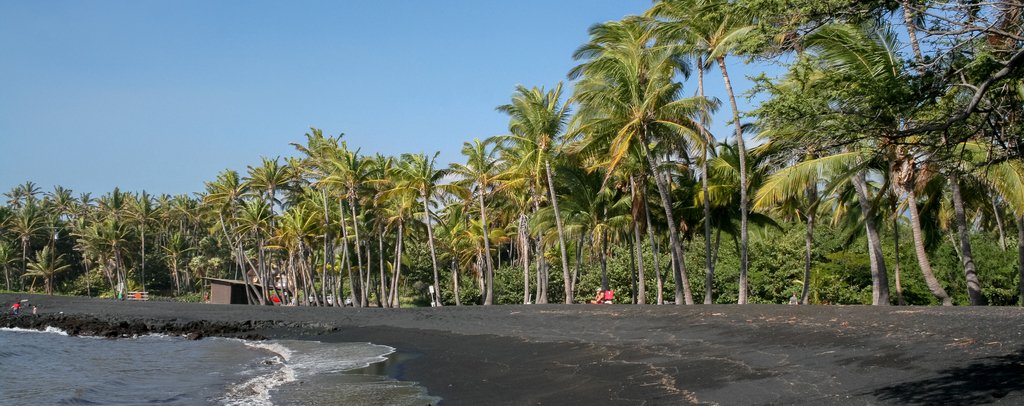
Punaluʻu Black Sand Beach replaces the familiar pale tropical shoreline with a sweep of charcoal-black grains. Coconut palms lean over the dark beach, and endangered Hawaiian green sea turtles are often seen resting near the water. The visual combination is startling: brilliant vegetation, white surf, blue ocean, and sand the color of crushed coal.
The sand began as molten basalt. When lava reached the ocean, rapid cooling and violent interaction with seawater shattered portions of the rock into dark fragments. Waves continued to break and sort that volcanic material until it collected along the coast. Unlike beaches built from coral or pale mineral grains, Punaluʻu openly displays the island’s fiery origin.
Fresh water also enters the bay through underground springs. The colder water can sometimes be seen mixing with seawater in shimmering patches near the shore. Local accounts describe people once diving with containers to collect fresh water during dry periods. Even the name Punaluʻu is associated with the idea of diving for spring water.
The beach is an important habitat for honu, or Hawaiian green sea turtles, and occasionally hawksbill turtles. A turtle resting on land may appear approachable, but it needs distance and quiet. Visitors should never touch, feed, crowd, or block the path of wildlife. The black sand must also remain on the beach rather than going home in pockets or bottles.
Punaluʻu has picnic facilities and restrooms, but swimming is often poor because the bottom is rocky and currents can be dangerous. Conditions and facility access can change, so visitors should check current information before making a long drive. The safest visit focuses on observing the landscape and wildlife from shore rather than treating the bay as a conventional swimming beach.
The beach lies within a culturally rich part of the Kaʻū district, where archaeological sites, historic trails, fishing traditions, and sacred places remain part of the living landscape. Respectful behavior matters as much as environmental care. Punaluʻu is memorable not simply because the sand is black, but because geology, fresh water, wildlife, and cultural history all converge in one compact coastal place.