
About Driftwood Beach
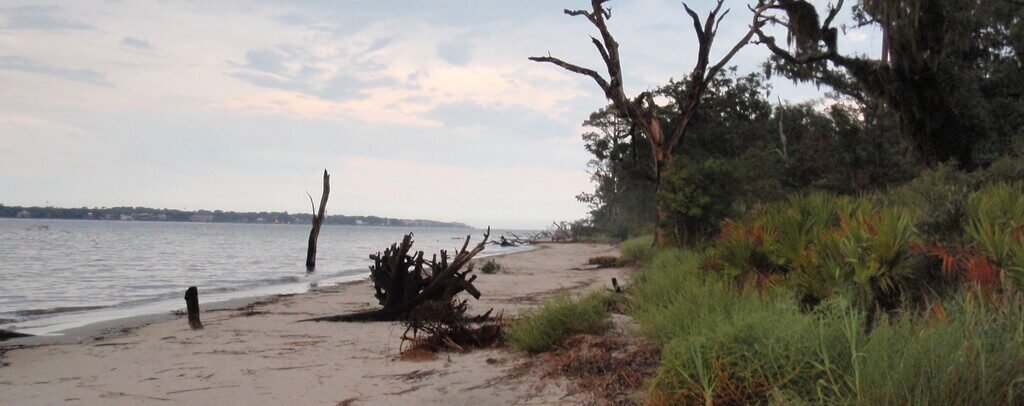
Driftwood Beach is lined with toppled oaks and pines whose pale trunks reach across the sand like giant bones. Some trees remain upright with bare limbs twisting toward the sky, while others lie half buried in tidal flats. The result is a natural sculpture garden that changes with every tide and storm.
The trees did not drift here from distant shores. They are the remains of a maritime forest that once stood on the northern end of Jekyll Island. As the shoreline slowly shifted and eroded, salt water reached the roots, killed the trees, and exposed them on the beach. Weather then stripped bark and polished the surviving wood.
Low tide reveals the greatest number of trunks and makes it easier to walk among them. High tide can surround individual trees and reduce available beach, producing very different photographs. Sunrise is especially popular because the Atlantic horizon lies beyond the branches, but changing light and cloud cover create strong scenes throughout the day.
The site supports wildlife despite its stark appearance. Shorebirds feed along the waterline, small creatures shelter around fallen wood, and nearby marshes and maritime forest remain part of a larger coastal ecosystem. Visitors should leave every branch in place rather than treating the beach as a source of souvenirs or firewood.
Access points and roadside parking areas lie along North Beachview Drive. Sand, roots, mud, and tide pools can make movement difficult, and conditions vary with weather. Jekyll Island charges a vehicle entry fee that supports island conservation and services, even though the beach itself has no separate admission charge.
Driftwood Beach feels uncanny because it presents a forest after the land beneath it has vanished. The dead trees are not preserved monuments, yet many remain for decades and have become one of Georgia’s most recognizable coastal scenes. Beauty here comes directly from erosion, decay, and the continuing movement of the shoreline.