
About Central State Hospital
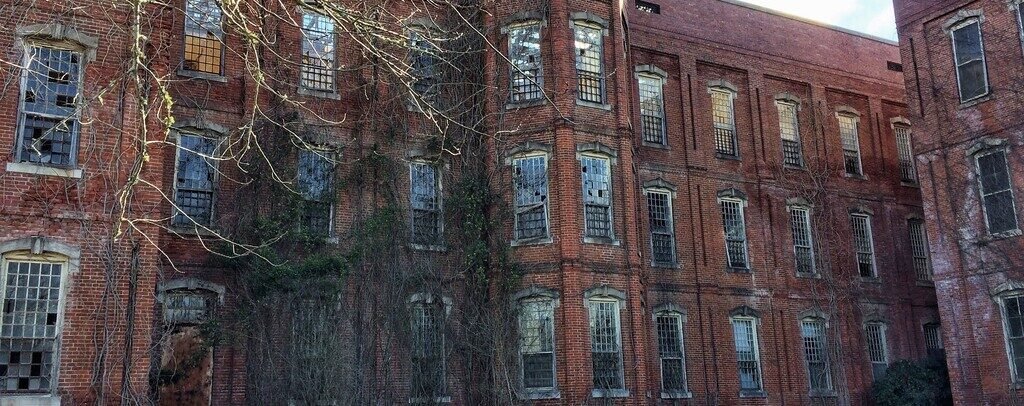
Central State Hospital spreads across an enormous campus outside Milledgeville, where imposing brick wards, utility buildings, pecan groves, and cemeteries survive from one of the largest psychiatric institutions in the world. Some facilities remain in use, while other structures stand empty behind broken windows and weathered facades.
Georgia authorized the institution in 1837, and its first patient arrived in December 1842. It opened under a name that used language now recognized as offensive, then became known as the Georgia State Sanitarium, Milledgeville State Hospital, and Central State Hospital. Its changing names reflect nearly two centuries of shifting ideas about mental illness and public care.
At its mid-twentieth-century peak, the campus held nearly 12,000 patients and operated like a self-contained city. Hundreds of buildings supported medical wards, kitchens, farms, laundries, power systems, and staff housing across roughly two thousand acres. The scale made the hospital famous, but severe crowding and inadequate staffing created conditions that harmed patients.
Journalist Jack Nelson exposed abuses at the institution in reporting that received the 1960 Pulitzer Prize for Local Reporting. Deinstitutionalization, psychiatric medications, community programs, and legal reforms later reduced the population dramatically. Many historic buildings closed, leaving the campus with an uneasy mixture of active services, redevelopment projects, and abandonment.
Several cemeteries contain the remains of thousands of former patients, many originally marked only by numbered posts. Memorial efforts have tried to restore names and dignity to people whose lives were reduced to institutional records. These burial grounds are among the most sobering parts of the site’s landscape and should be treated with care.
Central State Hospital is not an open ruin for exploration. Visitors must remain on public roads and authorized areas, obey signs, and avoid occupied, unsafe, or restricted buildings. Its significance lies beyond decay photography. The campus is a physical record of ambition, neglect, reform, and the complicated history of how society has treated people with mental illness.