
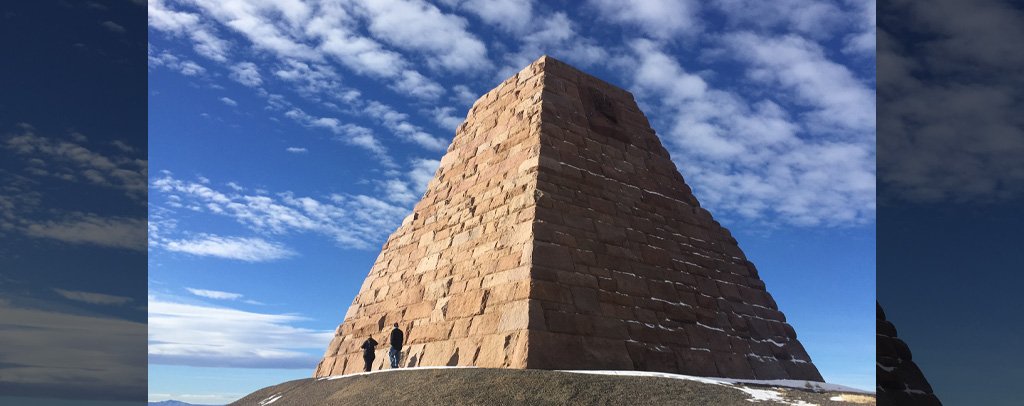
About Ames Monument
A sixty-foot pyramid made from massive blocks of Wyoming granite stands almost alone on the high prairie east of Laramie. It looks like the centerpiece of a settlement that disappeared, which is not entirely wrong.
Ames Monument was designed by prominent architect Henry Hobson Richardson to honor brothers Oakes and Oliver Ames, who were deeply involved in construction and financing of the Union Pacific portion of the first transcontinental railroad. Sculptor Augustus Saint-Gaudens created large portrait reliefs for the monument.
Completed in 1882, the pyramid stood beside the railroad near Sherman Summit, then the highest point on the Union Pacific line. Train passengers could see the enormous monument directly from the tracks.
Then the railroad changed routes.
When the line was relocated, the reason for placing a huge granite pyramid at that exact spot effectively vanished. The nearby town of Sherman disappeared as well, leaving the monument isolated among open grassland and remnants of transportation history.
Ames Monument is now a National Historic Landmark reached from local roads south of Interstate 80. Its strange atmosphere comes from the mismatch between effort and location. An architecturally ambitious sixty-foot pyramid was built for passing rail passengers, and then the passengers moved somewhere else.