
About Green Bank Telescope
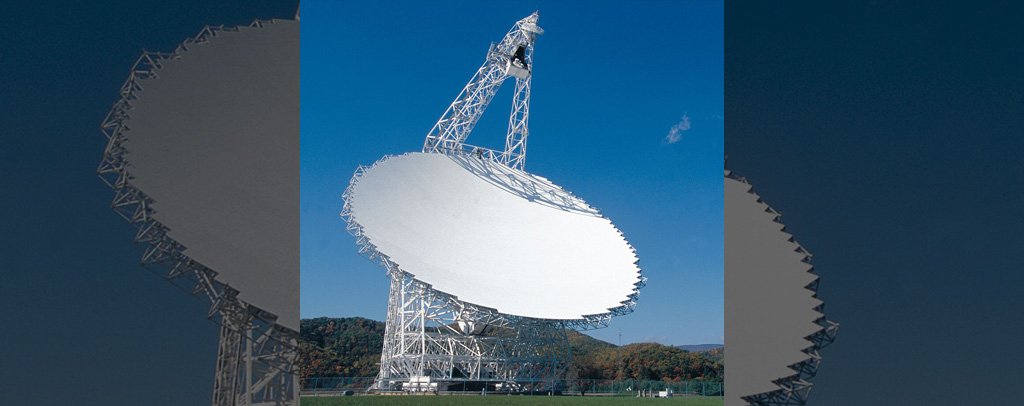
Green Bank is home to a machine so sensitive that ordinary electronic noise becomes part of the landscape around it. The Robert C. Byrd Green Bank Telescope is the world’s largest fully steerable radio telescope, standing more than 485 feet high and weighing almost 17 million pounds.
Its dish is roughly 330 feet across, larger than a football field, yet the entire structure can rotate and tilt to aim at different parts of the sky. Unlike optical telescopes that collect visible light, the GBT detects radio waves from astronomical objects and has been used for research ranging from pulsars and galaxies to planetary science.
The observatory operates inside both the National Radio Quiet Zone and the more tightly controlled West Virginia Radio Astronomy Zone. Those protections reduce radio-frequency interference that could overwhelm the incredibly faint signals astronomers are trying to detect. Electronic devices are restricted in sensitive areas of the observatory, and public tours use a specially managed radio-quiet bus.
Visitors can explore the Science Center and take guided tours that provide close views of the telescope. The result is one of America’s strangest technology landscapes: a gigantic moving machine surrounded by mountains, listening to signals from space while the human technology around it is asked to stay unusually quiet.