
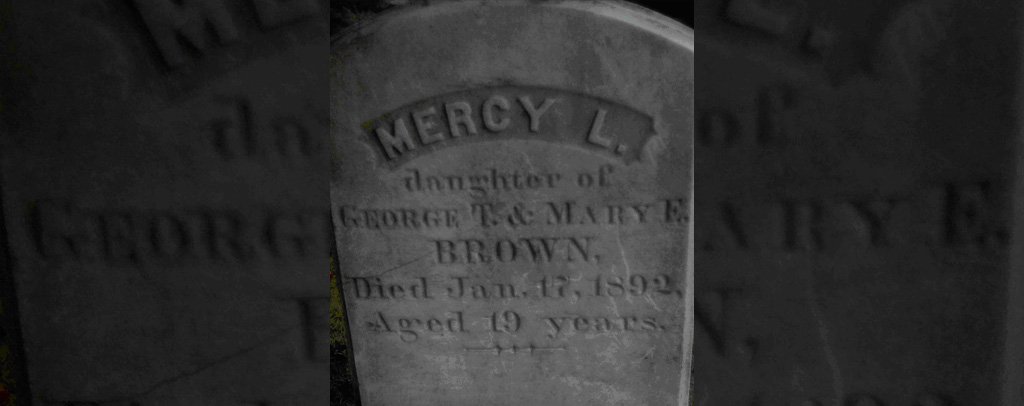
About Mercy Brown’s Grave
Mercy Lena Brown died of tuberculosis in January 1892 at nineteen years old. Two months later, people in rural Exeter dug up her body because members of the Brown family continued dying from the same disease.
Tuberculosis was then commonly called consumption, and its slow spread through families could be terrifying before modern medicine explained transmission clearly. In parts of nineteenth-century New England, older folk beliefs sometimes blamed the recently dead for drawing life from surviving relatives.
Mercy’s body had decomposed less than expected because it had been stored during cold winter conditions. Her heart and liver were removed and burned. According to contemporary accounts preserved by the Rhode Island Historical Society, the ashes were used in an attempted remedy for her sick brother Edwin. He died that May.
The grave is now the best-known physical marker of an episode that says far more about disease, fear, and folk medicine than about anything supernatural. Visitors should remember that this is an active cemetery and a real burial site. Do not disturb the grave, remove objects, or treat the surrounding plots as props.